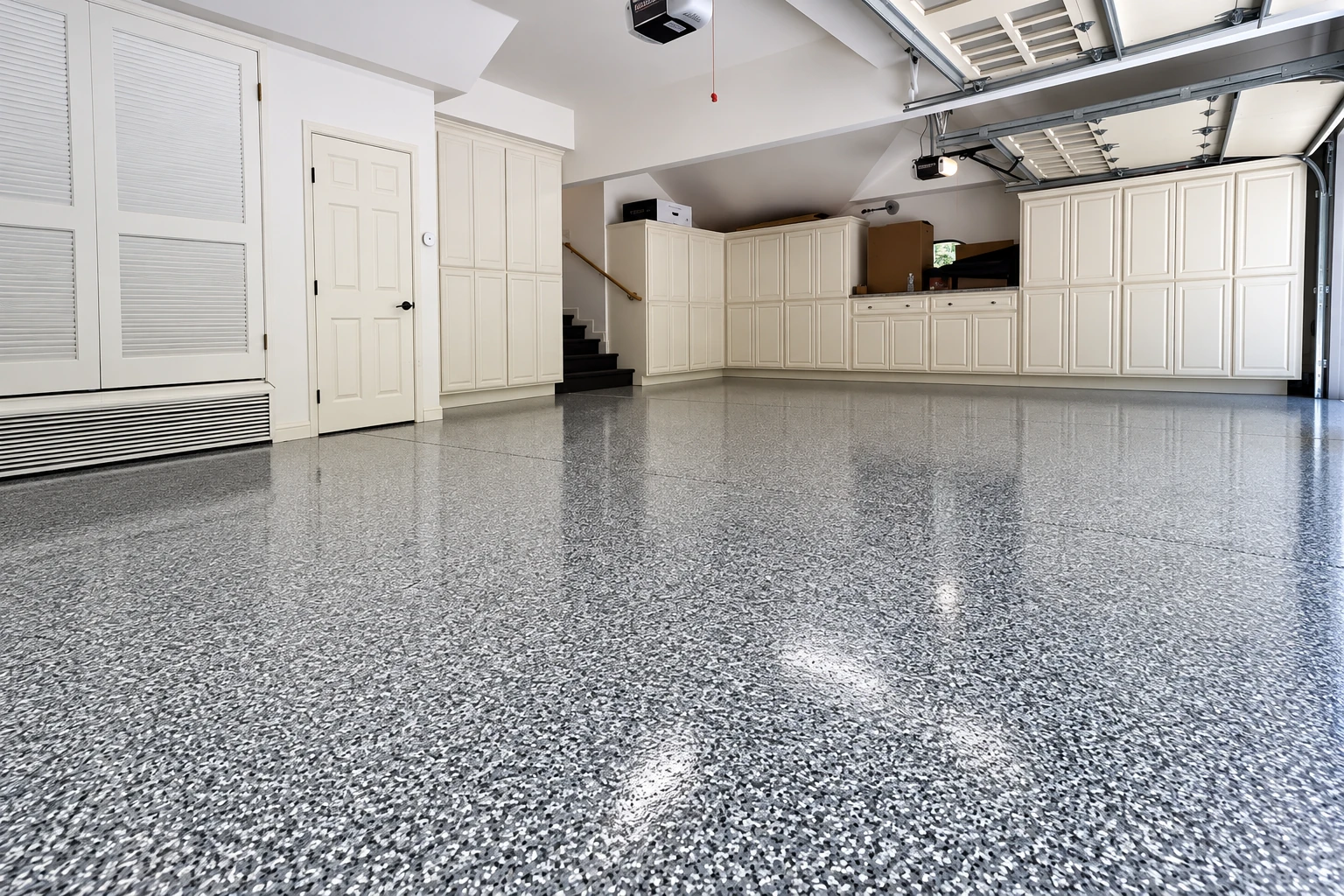
Polyaspartic Floor Coatings in La Presa CA - a garage floor you can use again sooner
Dusty, stained or peeling garage concrete becomes a hard, glossy floor, with a short wait before your car goes back inside.
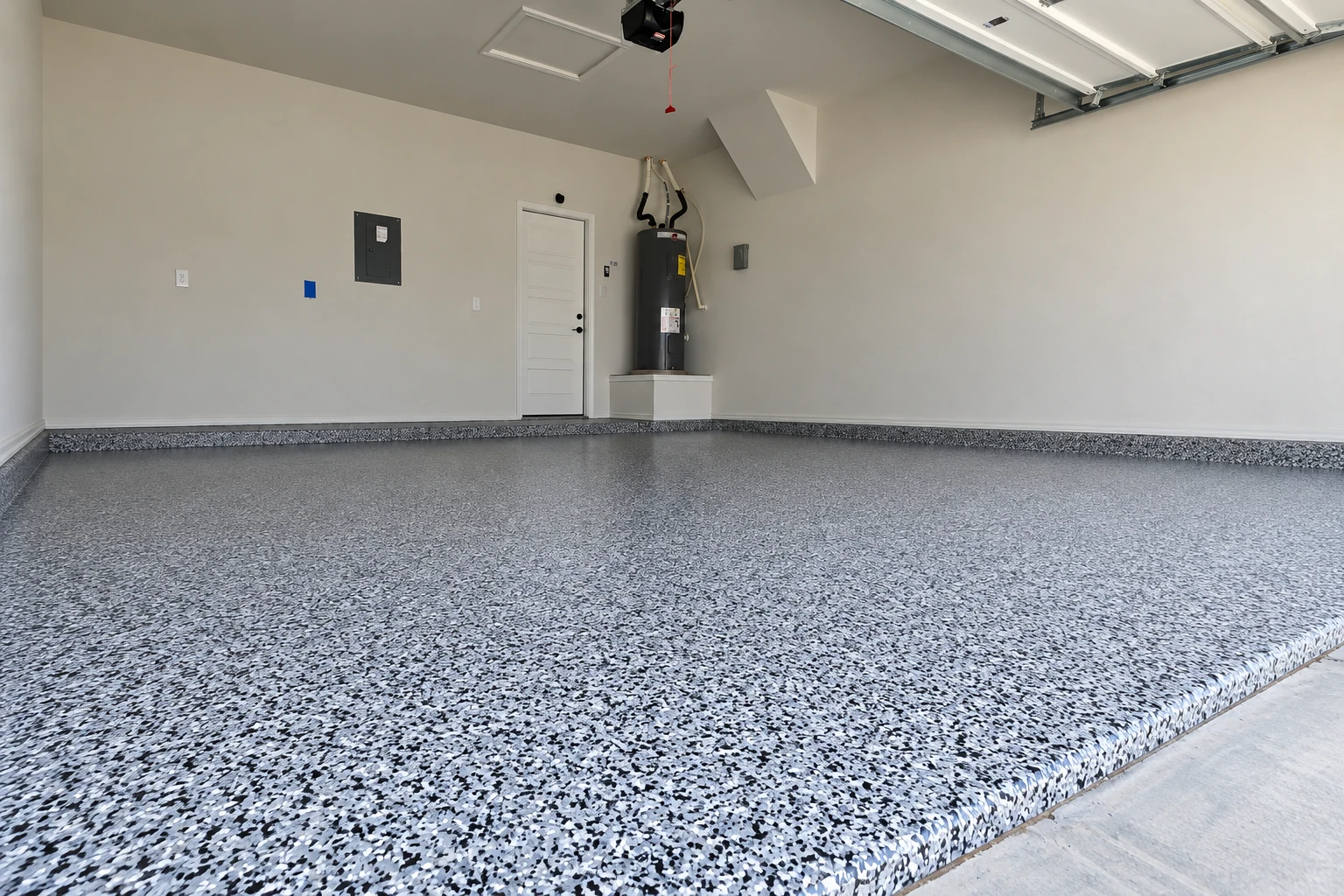
Is polyaspartic worth it over epoxy for my garage?
A polyaspartic floor coating is a newer, fast-curing coat for concrete, a modified kind of polyurea. For a La Presa garage it gives you a hard, easy-to-clean floor that doesn't yellow in sunlight and goes back into use sooner than epoxy usually allows.
Most people who call me about polyaspartic have a garage floor that's dusty, oil-stained or peeling from an old kit, and they want to know if the quicker turnaround is worth it. Your price mostly depends on the size of the floor, how much grinding and crack repair the slab needs, whether an old coating has to come off first through concrete floor stripping and removal, and the flake and topcoat you pick. The schedule turns on that same prep, any moisture we find and the cure wait before you drive on it. We'll walk you through how it compares with epoxy on cost and downtime, and the estimate at your property gives you your own figure.
How we install polyaspartic floor coatings
I start by walking the slab and asking what's been on it, because old paint, glue, sealer or a damp corner each changes the plan. Then we check for moisture, diamond-grind the surface with a vacuum on the grinder to keep the dust down, fill cracks and pits, and tape off the edges and the door line. Polyaspartic sets up fast, so there's very little room for mistakes once it's mixed, and we have the prep and the layout planned before we open a can, down to who rolls which section and which way we back out of the garage. We roll the base coat, broadcast flakes if you've picked them, scrape and vacuum off the loose ones, then roll the clear topcoat and leave the floor to cure.
Polyaspartic isn't the answer for every floor, and I'd rather tell you that up front. If you want a poured, marbled look inside the house or in a show garage, metallic epoxy flooring gives you a depth a flake floor doesn't. For a shop or work area that takes hot washdowns and heavy hits, urethane cement flooring is the tougher pick.
Full flake garage floor
This is the one most homeowners pick, a base coat buried under colored flakes and sealed with a clear polyaspartic topcoat. It hides small blemishes in the concrete, gives your shoes some grip and keeps oil and dirt on top where you can mop them off.
Epoxy base with polyaspartic top
Here an epoxy base coat goes down first because it fills and levels well, then a polyaspartic topcoat takes the wear. It adds cure time over an all-polyaspartic floor, but on a heavily pitted slab I'd usually go this way because the smoother base makes for a better finish.
Polyaspartic floor coatings on La Presa slabs
I can't tell you yet whether your coating job needs a permit, because that depends on the work and on which office covers your address. In the unincorporated parts of San Diego County, building permits for homes and commercial buildings come from the County's building division, and a property inside a city falls under that city's office instead. We check with the one that covers your property before work starts and let you know what they tell us.
A lot of the garages we see around here have been painted, sealed or coated with a store kit at some point, and that layer has to come off before anything new will grip. We find the same oil stains and peeling coatings on jobs in Spring Valley and Casa de Oro-Mount Helix, and since we're based in La Presa we take jobs across San Diego County, including plenty of cities not listed on this site.
Polyaspartic floor finish ideas
Why call us for polyaspartic
I come out and do the work
I'm the one who looks at your slab at the estimate, and I work on the floor alongside our crew. The person who spotted the damp corner or the old glue is the one making sure it gets handled.
Licensed and fully insured
We're licensed and fully insured, which protects you and your house while our crew is grinding and coating in your garage. Ask me about it when I come out, the same as you'd ask any installer.
Peeled coatings and old glue
Since I started this business here in La Presa in 2023, we've become known for the slabs with old glue, damp spots or a coating that already let go. That matters with polyaspartic, because a fast-setting coat holds only as well as the slab under it.
The slab underneath decides how long a polyaspartic floor holds, so the first step is me seeing yours. Book an estimate visit and we'll set a time.
(619) 609-0422Get a polyaspartic floor estimate at your garage
We reply within one business day to set a time, and then I come out to look at your slab and talk through polyaspartic against epoxy. The estimate is free, done at your property, and comes with no obligation.
Polyaspartic questions from La Presa homeowners
How much does a polyaspartic garage floor cost in the San Diego area?
Polyaspartic garage floor coating in the San Diego area usually costs about $3,000 to $5,000 for a 2-car garage. Published prices here run higher than epoxy for the same garage, so the extra mostly buys you the faster cure, and one guide estimates a polyaspartic floor lasts 15 to 20 years. Your own figure comes from the estimate, once I've seen the slab and the prep it needs.
How long does a polyaspartic floor take to cure before I can park on it?
One guide says you can drive on a polyaspartic floor within 24 hours, against 5 to 7 days for epoxy. Products differ, though, and one maker's data sheet lists 48 hours before heavy traffic on its coating. We'll tell you the wait for the product going on your floor before we start, so you can plan where the car goes.
What is the best way to prep a garage floor for polyaspartic, grinding or acid wash?
Diamond grinding is the better prep, because it sands off the top layer of concrete so the coating has something to grip. An acid wash is faster and cheaper, but its bond is usually weaker, and one coating maker states that performance is proportional to the degree of surface prep. A San Diego garage floor guide says most installers treat grinding as standard, so check which method each quote lists. We grind.
Can you put a polyaspartic coating on a new concrete slab?
Yes, once the concrete has cured long enough. One maker's data sheet requires a new slab to cure at least 28 days before its polyaspartic goes on, so if your pour is fresh, plan the coating for after that wait. Tell us the slab's age when you reach out and we'll schedule around it.
Do I need a professional to install a polyaspartic garage floor in La Presa?
One guide says polyaspartic needs professional installation, because it cures so fast the installer has to work quickly and accurately. There's no do-over once a batch starts setting, so compare installers' experience as closely as their prices. Ask how many polyaspartic floors they've put down and what they check on the slab first.
What causes a garage floor coating to peel or lift?
It usually comes down to moisture in the slab or prep that didn't give the coat enough to grip. A slab can feel bone dry and still hold enough moisture inside to lift a coating within months, so a moisture check is a fair question for any installer. One maker also requires the slab surface to stay above the dew point while its coating goes on, since condensation can stop it bonding or leave a cloudy blush on the finish.
Plan your garage floor prep and polyaspartic coat
Call (619) 609-0422 or send the form with your garage size and the slab's age, so I know what to check on my visit.