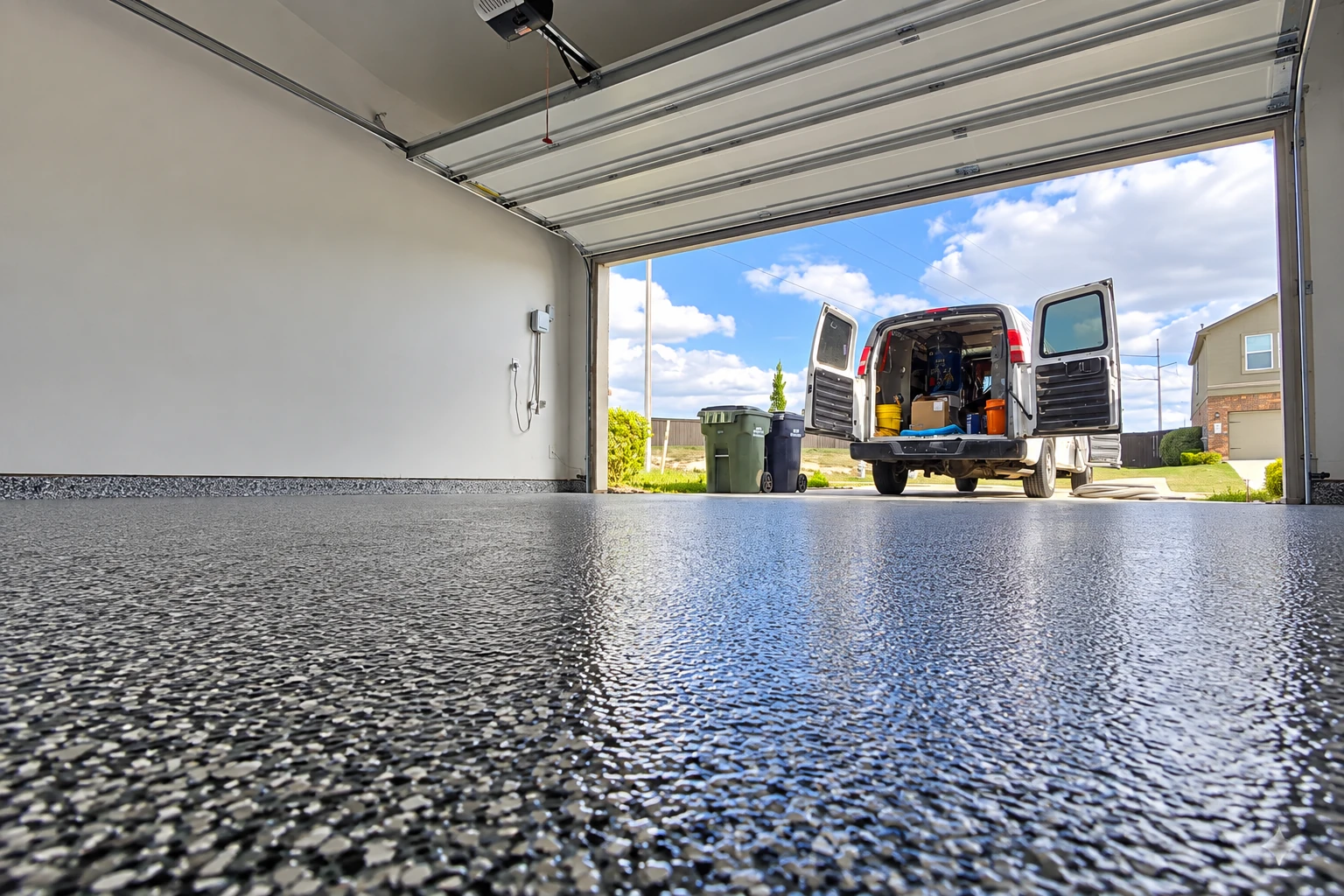
Basement Flooring in La Presa CA - a floor chosen for what your slab can handle
Damp spots, old glue or a cold, bare slab downstairs? We test the concrete first, then put down a floor that suits it.
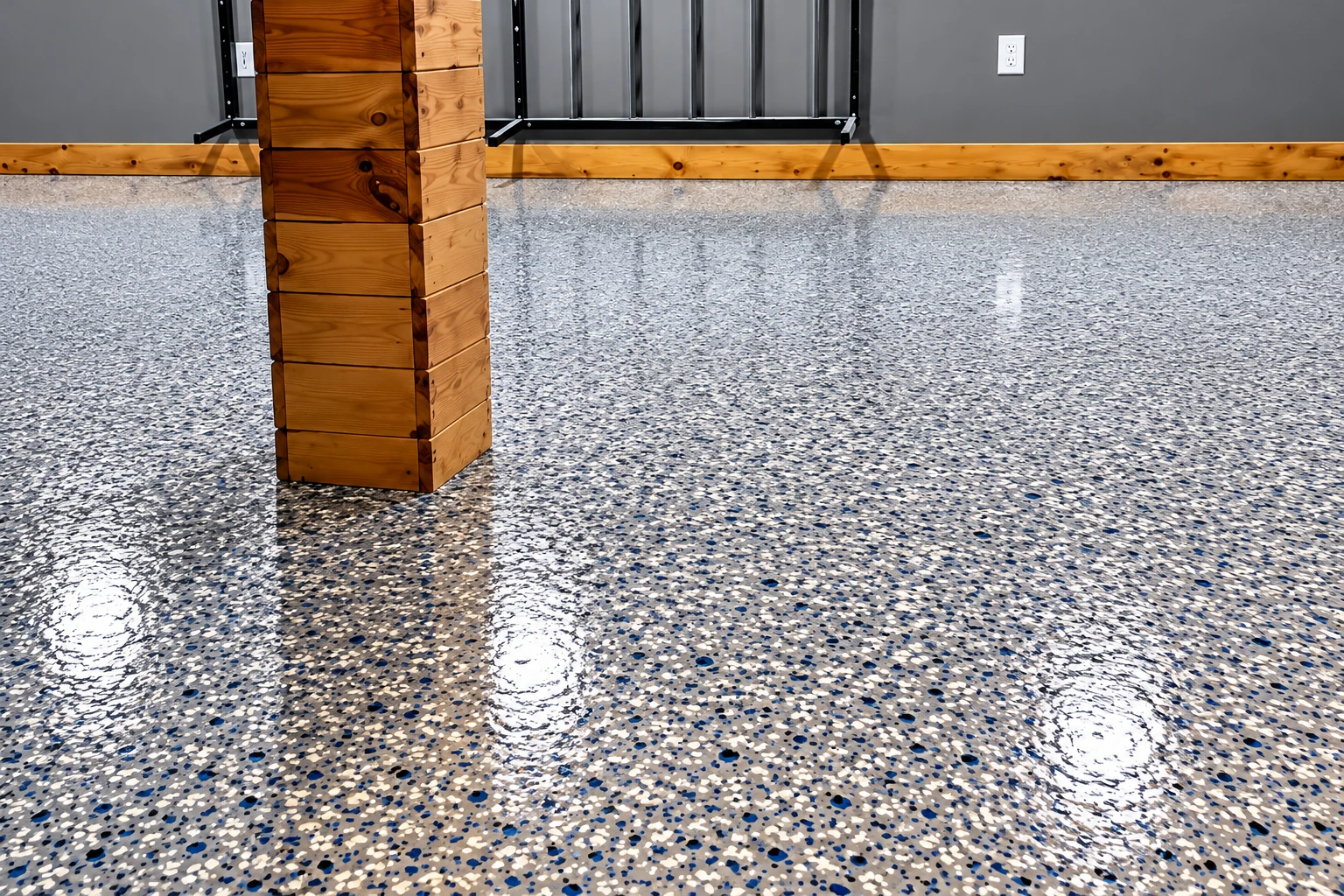
What's the right floor for my basement?
Basement flooring in La Presa means getting the concrete slab under your basement ready and then putting down a floor that suits it, such as a sealed or coated slab, carpet, resilient sheet flooring, tile or wood. Done in that order, the floor you walk on sits on concrete that's dry, flat and clean enough to hold it.
Most people call because of something they've noticed downstairs, like a damp patch, old carpet glue or a coating that's started to peel, or because they want to turn a bare slab into a real room. The price moves with the size of the room, whatever's on the concrete now and has to come off, which can mean stripping an old coating or glue, how much prep the slab needs, whether you want insulation under the floor and which floor you choose. The schedule turns on what the slab test shows and, if you're finishing the whole basement, on the other trades, since the floor usually goes in once the drywall, painting and other wet work are done. I'll go over all of it at your property, and that estimate is where you get your own number.
How our basement flooring job goes
In a basement the first question is water, so before anyone picks a floor, I look for where any moisture is coming from and we test the slab. If there's a water problem, I'll tell you to get that dealt with first, because a new floor over a wet slab just covers the problem up. I check head height on that same visit, since some floor builds add height and most basements don't have much to spare. Once the slab checks out and we've settled on a floor, we take up what's on it, get the surface flat and clean, put the new floor down and clean up after ourselves.
Most of what makes a basement floor hold up happens before the finish goes on. Concrete grinding and surface preparation is how we take off old glue and coatings and open up the concrete so the next layer can grip it, and concrete sealing is the simpler route if you'd rather keep the concrete as your floor and just protect it.
Coated or sealed concrete
This suits a basement that works hard, like a home gym or a hobby room, where you want a surface you can mop. It's the work we do most, and it stays thin, which helps when head room is tight.
Wood over a prepared slab
Solid and engineered wood can go over concrete once the slab is properly prepared for it, so it suits a basement you're turning into living space. Wood needs a dry slab, so it's the choice we hold until the test results are in.
Carpet or resilient flooring
Carpet and resilient sheet goods or tile suit a family room or bedroom where you want something softer underfoot. They still need a flat, clean slab, so the prep happens first either way.
Ceramic tile
Tile suits a basement bathroom, but the state's flooring contractor license leaves out ceramic tile. If that's the floor you want, ask any contractor which license covers the tile work before you hire them.
Basement flooring in La Presa and the permit question
Whether your basement floor needs a permit isn't something I'll guess at, because it depends on the work and the address. In the unincorporated parts of San Diego County, building permits for homes and businesses come from the county's Building Services Division, and the county says some structures that meet set requirements, like size and location, may be exempt, while addresses inside a city go through that city. Before work starts, we check with the office that covers your property and tell you what they said, and if you're unsure about an exemption, you can contact the county yourself.
A lot of the basement calls we get around La Presa, and on jobs in Spring Valley and Lemon Grove, are slabs that already had something on them, like carpet glue, old tile or a coating that's now peeling. We find out what that layer is before anyone starts scraping, then plan the prep around what's actually there.
Basement and concrete floor work
Why call us for basement flooring
I quote it and work it
I'm the one who comes out to look at your basement, and I'm on the floor with our crew when the work happens. What I find on that first visit doesn't get lost being passed to someone else.
Learned on my dad's floor jobs
I learned concrete floors working my dad's jobs for years, and I started this business here in 2023. That's why the first thing I ask about is what's been on your slab and what happened to it.
Licensed and fully insured
We're licensed and fully insured. That's the first thing to check with anyone who'll be grinding concrete inside your house.
Based in La Presa, county-wide
We're based in La Presa and take jobs in the cities around it across San Diego County, including many that aren't listed on this site. If your city isn't on our list, call anyway and ask.
The floor you see is only as good as the slab under it, so the first step is letting me look at yours. Get in touch and we'll set a time to come out.
(619) 609-0422Get a basement floor plan that starts with your slab
We reply within one business day to set a time, and I come out to look at your basement and give you the estimate there, free and with no obligation. If you know the room size, any water or damp trouble and roughly how much head room you have, add it to the form.
Basement flooring questions from La Presa homeowners
Do I need a moisture test before a wood floor goes in my basement?
Yes. Wood flooring installation guidelines call for a moisture test on every job, and wood only goes down where no known moisture problem remains, because one can damage the floor, the house or the people living in it. That's why we test before you settle on wood, not after the boxes arrive.
Can wood flooring go over a concrete basement floor in La Presa?
Yes, solid and engineered wood can both go over concrete once the slab is properly prepared for wood. High spots get ground flat and low spots get filled before the floor goes down, and since grinding throws silica dust, crews doing it follow OSHA's rules on exposure. I'll tell you on the visit how much leveling your slab looks like it needs.
How do I insulate a basement floor without tearing out the slab?
Rigid foam insulation and water control layers can go right on top of the existing slab. The other way is breaking out the slab, insulating underneath and pouring a new one, but that's rarely practical because of the cost. Foam on top is a real option for a basement you want to live in, as long as your head room allows it.
What if my basement ceiling is too low to raise the floor?
Then the floor has to stay thin, because insulation over the slab raises the floor and your head height still has to meet the building code your area has adopted. Where there isn't room, the minimum is patching the slab, sealing it to the foundation wall and coating it with epoxy for moisture control. Epoxy coating is everyday work for us, so that route is straightforward.
How much does basement flooring cost in the San Diego area?
Flooring installation in the San Diego metro area usually runs about $4 to $20 per square foot. That's the going rate across the area, not our price, and the wide spread comes from the floor you pick and how much work the slab needs first. Your own number comes from the estimate at your property.
How do I remove old vinyl flooring from a basement safely?
Carefully, and only after you know what's in it, because one flooring maker's guide warns of asbestos and silica hazards when old resilient flooring comes up. That guide points to the Resilient Floor Covering Institute's recommended removal practices, so ask whoever does the work how they follow them. Old glue or a peeled coating on bare concrete is the kind of slab we're known for sorting out.
Talk to us about your basement slab and floor
Call (619) 609-0422 before you order flooring, so we can look at your slab and tell you what it'll hold.